



Court Martial Proceedings under Indian Law
Court Martial Proceedings under Indian Law
• One kind of military court that has the authority to trial members of the armed services for crimes against military law is a court martial.
• Military commanders usually preside as both judge and jury in a court martial. The court martial, a judicial hearing held inside the military to handle significant offenses committed by its troops, is a vital component of military justice.
Legislation regarding Court Martial Proceedings:
- The Armed Forces Act oversees court martial proceedings, which have to adhere to particular rules and procedures outlined in military law. In India, the Army Act, 1950, the Navy Act, 1957, and the Air Force Act, 1950 serve as the fundamental statutory basis for court martial. These acts specify the offenses that can be prosecuted in a military tribunal and the processes that must be followed throughout the proceedings. The goal is to hold military personnel responsible for their conduct while upholding obedience and the credibility of the military as a whole.
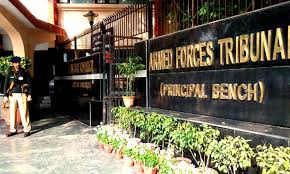
- The Armed Forces Tribunal was established by the Armed Forces Tribunal Act of 2007 and is tasked with resolving disputes between individuals covered by the Army Act, 1950, the Navy Act, 1957, and the Air Force Act 1950. through trial or adjudication.
- The court martial ruling can be appealed to the Armed Forces Tribunal. Furthermore, the decision or verdict of the Armed Forces Tribunal can be appealed to the High Court.
Types of Court Martial - General Court Martial (GCM).
Everyone, from soldier to officer, can be penalized, and the panel, aside from the judge, is made up of 5 to 7 members. This court has the authority to impose penalties ranging from life in prison to death. - District Court Martial (DCM).
This court can penalize any individual, from soldier to Junior Commissioned Officer (JCO), and the panel is made up of two or three members. Furthermore, the panel has the authority to jail for a period of two years. - The Summary General Court Martial (SGCM) convicts officers for crimes committed in Jammu and Kashmir.
- Summary Court Martial (SCM).
This court martial tries individuals ranging in rank from soldier to non-commission officer (NCO), and violators may face a two-year jail sentence.
The Supreme Court denied an appeal brought by a Mechanical Transport Driver enlisted in the Army Service who had been fired for exceeding his allotted leave of absence in the case of ex sepoy Madn Prasad vs. Union of India and Ors. The Apex Court declared that the member of the Armed Forces' egregious lack of discipline is intolerable, finding him to be a repeat offender.
The Supreme Court emphasized that discipline is a non-negotiable requirement of service and the implicit trademark of the armed forces.
Conclusion:
The authority of a court martial is equivalent to that of a civil court. When it comes to military law, a court-martial has the authority to judge whether or not a member of the armed services is guilty and, if so, to establish the appropriate penalty. The rights of military personnel who are involved in legal procedures within the armed services are safeguarded by these proceedings, which play a vital role in maintaining justice.
RELATED Blog




comments