


Purpose-Driven Corporate Governance Trends Uk.
Purpose-Driven Corporate Governance Trends in the UK



4
Purpose-driven corporate governance in the UK reflects a shift from pure shareholder primacy toward stakeholder-oriented, long-term value creation. This trend is shaped by statutory reforms, evolving judicial interpretation, investor pressure, and ESG (Environmental, Social, Governance) expectations.
1. Statutory Foundation: Enlightened Shareholder Value (ESV)
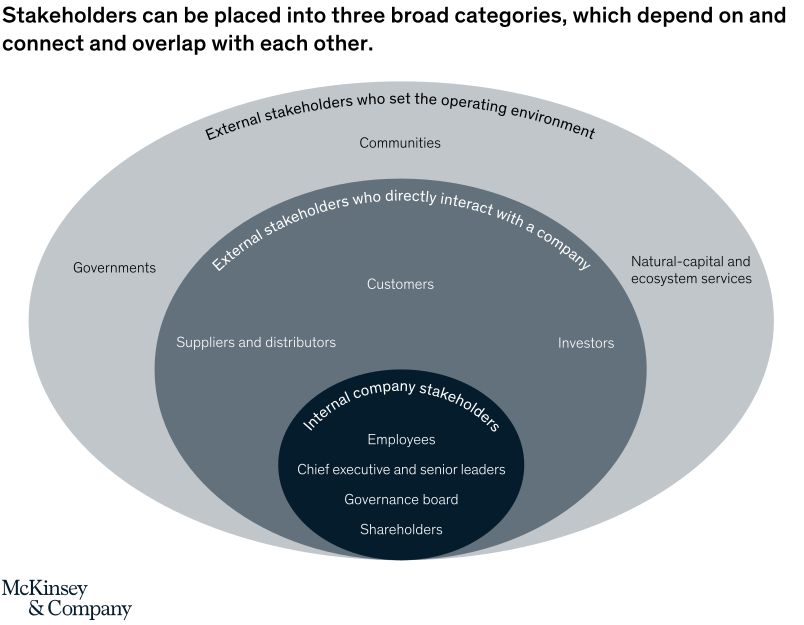
The cornerstone of purpose-driven governance in the UK is Section 172 of the Companies Act 2006, which requires directors to:
- Promote the success of the company for members (shareholders),
- While having regard to broader factors such as:
- Employees
- Suppliers and customers
- Community and environment
- Long-term consequences
Key Trend:
Companies increasingly articulate corporate purpose statements aligned with Section 172 duties, integrating social and environmental considerations into strategy.
Case Laws:
- Regentcrest plc v Cohen (2001)
- Established the subjective good faith test for directors’ decisions.
- Courts defer to directors if they honestly believe actions promote company success.
- Item Software (UK) Ltd v Fassihi (2004)
- Reinforced fiduciary duties, including good faith and loyalty, supporting purpose-driven accountability.
- Extrasure Travel Insurances Ltd v Scattergood (2003)
- Confirmed directors must exercise independent judgment, even when balancing stakeholder interests.
2. Rise of ESG and Stakeholder Governance

4
UK companies increasingly embed ESG principles into governance frameworks.
Key Developments:
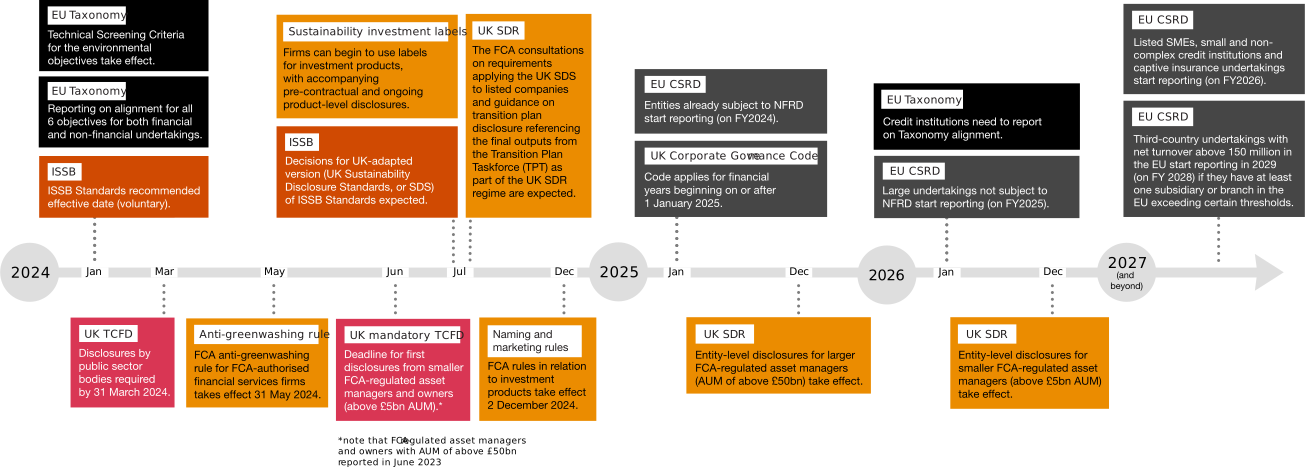
- Mandatory non-financial reporting (e.g., climate disclosures)
- Board-level ESG committees
- Integration of sustainability into executive remuneration
Case Laws:
- ClientEarth v Shell plc (2023)
- Environmental NGO challenged directors for failing climate obligations.
- Although unsuccessful, it marked a landmark attempt to enforce ESG duties via derivative action.
- BTI 2014 LLC v Sequana SA (2022, UK Supreme Court)
- Recognized creditor interests when a company nears insolvency.
- Expands governance beyond shareholders, aligning with stakeholder logic.
3. Corporate Purpose Statements and Governance Codes
The UK Corporate Governance Code (2018 & 2024 updates) emphasizes:
- Alignment of purpose, values, and strategy
- Board responsibility for embedding purpose into culture
- Stakeholder engagement mechanisms
Trend:
Boards must demonstrate that purpose is operationalized, not merely symbolic.
Case Laws:
- Howard Smith Ltd v Ampol Petroleum Ltd (1974)
- Directors must exercise powers for proper purposes, not merely legal compliance.
- Forms the doctrinal basis for evaluating “purpose” in governance.
- Hogg v Cramphorn Ltd (1967)
- Invalidated actions taken for improper purposes, even if believed beneficial.
- Highlights limits of subjective good faith.
4. Stakeholder Enforcement and Litigation Risk
Purpose-driven governance is increasingly tested through litigation, though enforcement remains limited.
Emerging Issues:
- Shareholder activism around ESG
- Derivative claims against directors
- Reputational risks tied to “purpose washing”
Case Laws:
- Stimpson v Southern Private Landlords Association (2009)
- Demonstrates procedural barriers in derivative claims.
- Mission Capital plc v Sinclair (2008)
- Clarifies directors’ fiduciary obligations in decision-making contexts.
5. Purpose vs Profit Tension


4
A central governance tension is balancing:
- Short-term shareholder returns
- Long-term sustainable value
Judicial Position:
UK courts still prioritize:
- Shareholder success (primary duty)
- But allow wide discretion in considering stakeholders
Case Laws:
- Re Smith & Fawcett Ltd (1942)
- Directors must act in what they consider is in the company’s best interests.
- Eclairs Group Ltd v JKX Oil & Gas plc (2015)
- Reaffirmed the proper purpose doctrine in governance decisions.
6. Purpose Washing and Regulatory Scrutiny
Companies may adopt purpose rhetoric without substantive change—known as purpose washing.
Regulatory Responses:
- Enhanced disclosure obligations
- FCA scrutiny of ESG claims
- Investor stewardship codes
Case Laws:
- Sharp v Blank (2019)
- Emphasized full and fair disclosure in shareholder communications, relevant to purpose claims.
7. Future Direction of UK Governance
Key Trends:
- Movement toward mandatory ESG accountability
- Increased board diversity and stakeholder representation
- Expansion of fiduciary duties interpretation
- Potential adoption of benefit corporation-like models
Conclusion
Purpose-driven corporate governance in the UK is evolving through:
- Statutory reform (Companies Act 2006)
- Judicial doctrines (proper purpose, good faith)
- ESG integration and stakeholder pressure
While the UK has not fully abandoned shareholder primacy, it has developed a hybrid model where corporate purpose operates within the framework of long-term shareholder value. Courts remain cautious, but litigation trends (e.g., climate cases) suggest growing accountability.
RELATED Blog



comments