


Risk-Based Aml Approach.
Risk-Based AML Approach


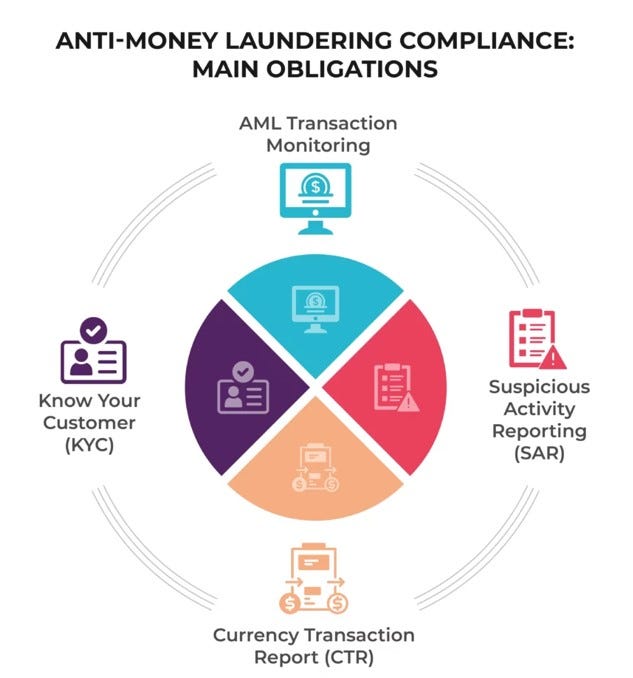

4
1. Concept and Meaning
The Risk-Based Anti-Money Laundering (AML) Approach is a regulatory and compliance framework under which financial institutions identify, assess, and mitigate money-laundering and terrorist-financing risks based on their severity and likelihood, rather than applying uniform controls to all customers and transactions.
It is the global standard endorsed by:
- Financial Action Task Force (FATF)
- Basel Committee on Banking Supervision
- National AML regulators
2. Core Philosophy
“Higher risk → Enhanced controls; Lower risk → Simplified controls.”
This approach ensures:
- Efficient allocation of compliance resources
- Focus on high-risk customers, products, and jurisdictions
- Proportional regulatory compliance
3. Key Components of the Risk-Based AML Framework
(a) Risk Identification
- Identify risks across:
- Customers (PEPs, high-net-worth individuals)
- Products (private banking, trade finance)
- Geography (high-risk jurisdictions)
- Channels (online, cross-border)
(b) Risk Assessment
- Categorize risk levels (low, medium, high)
- Use scoring models and risk matrices
(c) Customer Due Diligence (CDD)
- Standard verification (KYC) for all customers
(d) Enhanced Due Diligence (EDD)
- Applied to high-risk customers
- Includes deeper scrutiny of:
- Source of funds
- Beneficial ownership
(e) Ongoing Monitoring
- Transaction monitoring systems
- Detection of suspicious patterns
(f) Suspicious Activity Reporting (SAR/STR)
- Mandatory reporting to regulators
(g) Internal Controls and Governance
- AML policies and procedures
- Compliance officer (MLRO)
- Independent audits
4. Legal and Regulatory Foundations
- FATF Recommendations (especially Recommendation 1)
- National AML laws (e.g., Prevention of Money Laundering laws)
- Banking and financial regulations
5. Key Case Laws on Risk-Based AML Approach
(1) HSBC Holdings plc Deferred Prosecution Agreement (2012)
- Failure to implement adequate AML controls.
- Allowed laundering through weak monitoring systems.
- Principle: Institutions must adopt risk-based AML controls proportionate to exposure.
(2) United States v. Bank of New York Mellon (2005)
- Failure to detect suspicious transactions.
- Principle: Ongoing monitoring is essential in AML compliance.
(3) Wachovia Bank AML Case (2010)
- Failure to identify high-risk transactions linked to drug trafficking.
- Principle: High-risk activities require enhanced due diligence.
(4) Standard Chartered Bank AML Enforcement Actions (2012–2019)
- Violations involving high-risk jurisdictions.
- Principle: Geographic risk must be integrated into AML frameworks.
(5) Danske Bank Estonia Branch Scandal (2018)
- Massive AML failures in high-risk non-resident accounts.
- Principle: Weak risk assessment frameworks lead to systemic failures.
(6) Commonwealth Bank of Australia v. AUSTRAC (2018)
- Failure to report suspicious transactions.
- Principle: Reporting obligations are central to AML compliance.
(7) ING Bank N.V. Settlement (Netherlands) (2018)
- Inadequate AML controls and monitoring systems.
- Principle: Technology and internal controls must support risk-based AML.
6. Doctrinal Principles Emerging from Case Law
(i) Proportionality Principle
- Controls must match the level of risk
(ii) Duty of Continuous Monitoring
- AML is not a one-time process
(iii) Accountability of Institutions
- Institutions liable for systemic failures
(iv) Importance of Internal Controls
- Weak governance leads to regulatory penalties
7. Governance Structure in Risk-Based AML
| Level | Responsibility |
|---|---|
| Board of Directors | Oversight of AML framework |
| Senior Management | Implementation |
| AML Compliance Officer | Monitoring and reporting |
| Internal Audit | Independent review |
8. Advantages of Risk-Based AML Approach
- Efficient resource allocation
- Focus on high-risk areas
- Improved detection of suspicious activities
- Regulatory alignment with global standards
9. Challenges
- Difficulty in accurate risk assessment
- Data quality and technology limitations
- Regulatory complexity across jurisdictions
- Balancing compliance with customer experience
10. Best Practices
- Comprehensive risk assessment models
- Advanced transaction monitoring systems (AI/ML)
- Regular updating of risk profiles
- Strong governance and accountability
- Employee training and awareness
- Independent audits and testing
11. Analytical Perspective
The Risk-Based AML Approach represents a shift from:
- Rule-based compliance → Intelligence-driven risk management
Regulators and courts increasingly focus on:
- Whether institutions identified high-risk areas
- Whether they allocated resources appropriately
- Whether they responded to red flags effectively
12. Conclusion
The Risk-Based AML Approach is the cornerstone of modern financial compliance. It ensures:
- Effective prevention of money laundering
- Efficient use of compliance resources
- Alignment with global regulatory expectations
The case law demonstrates:
AML liability arises not from the existence of risk—but from the failure to identify, assess, and manage it appropriately.
RELATED Blog

comments