



Ancient Texts Influencing Hindu Family Law.
Ancient Texts Influencing Hindu Family Law
1. Introduction
Hindu Family Law in India is deeply rooted in ancient religious and customary texts, which shaped early rules relating to marriage, inheritance, adoption, maintenance, and guardianship. Even after codification through modern statutes like the Hindu Marriage Act, 1955 and Hindu Succession Act, 1956, courts still rely on these ancient texts for:
- Interpretation of customary practices
- Understanding historical legal principles
- Filling statutory gaps
- Determining “Hindu law” as personal law
These texts are not directly enforceable today but remain persuasive sources of law.
2. Major Ancient Texts Influencing Hindu Family Law
(A) The Vedas
- Considered the earliest sacred texts of Hindu tradition
- Contain references to:
- Marriage as a sacrament
- Importance of family continuity
- Duties of husband and wife
- Emphasize dharma (duty) over legal rights
📌 Influence: Marriage viewed as a religious sacrament (samskara) rather than a contract.
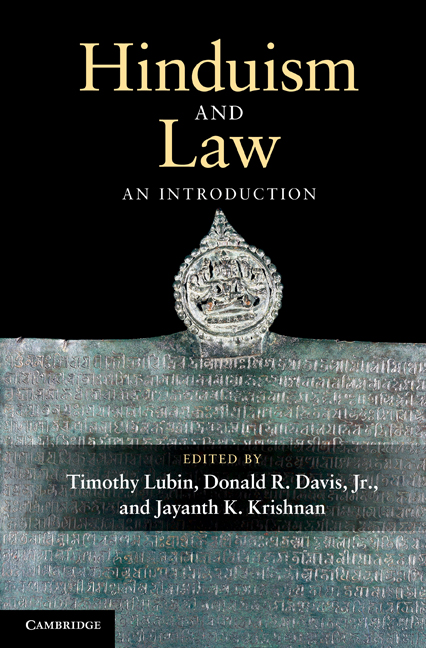
(B) Smritis (Especially Manusmriti)


4
The Manusmriti is the most influential source of classical Hindu law.
Key principles:
- Classification of marriage types
- Rules of inheritance and property
- Duties of women and widows
- Concept of joint family system
📌 Influence:
- Basis for coparcenary and inheritance rules
- Foundation of patriarchal family structure
(C) Dharmashastras (Yajnavalkya, Narada, Brihaspati Smritis)
These texts refined Manusmriti principles.
Key contributions:
- More practical legal rules than Manusmriti
- Recognition of:
- Partition of property
- Widow’s rights (limited but acknowledged)
- Evidence and dispute resolution
📌 Yajnavalkya Smriti is considered more liberal and systematic.
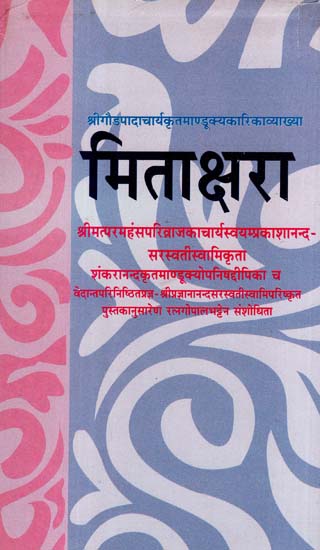
(D) Commentaries (Mitakshara and Dayabhaga Schools)


4
Two major schools developed:
1. Mitakshara School (Vijnaneshwara)
- Followed in most of India
- Based on birthright in ancestral property
- Coparcenary system established
2. Dayabhaga School (Jimutavahana)
- Followed in Bengal
- Property rights arise after death of father
- More individual ownership focused
📌 Influence:
- Modern Hindu Succession Act was heavily influenced by Mitakshara principles (later modified).
(E) Customs (Achara)
- Recognized as a source of Hindu law
- Customs often override written texts if:
- Ancient
- Continuous
- Certain and reasonable
📌 Example:
- Regional inheritance practices
- Marriage customs like cross-cousin marriages in South India
3. Role of Ancient Texts in Modern Hindu Family Law
Even today, courts use these texts to:
- Interpret ambiguous statutory provisions
- Understand “Hindu” personal law background
- Validate customary practices
- Fill legislative silence
However:
- Modern statutes override ancient texts
- Constitutional principles (equality, dignity) prevail
4. Important Case Laws (At least 6)
(1) Shastri Yagnapurushdasji v. Muldas Bhudardas Vaishya (1966)
- Supreme Court explained Hinduism as a way of life rooted in ancient texts.
- Recognized Vedas and Smritis as foundational sources of Hindu law tradition.
- Clarified that Hindu law is not a rigid code but evolving dharma.
(2) CWT v. R. Shridharan (1976)
- Court acknowledged Mitakshara principles in understanding coparcenary property.
- Reinforced that Hindu law concepts derive from ancient jurisprudence traditions.
(3) Gurupad Khandappa Magdum v. Hirabai Khandappa Magdum (1978)
- Interpreted coparcenary rights using Mitakshara principles.
- Recognized that ancient Hindu law concepts govern devolution of property unless modified by statute.
(4) State of Bombay v. Narasu Appa Mali (1952)
- Though controversial, the case acknowledged that personal laws are derived from religious texts and customs.
- Discussed Hindu law as rooted in ancient scriptures and societal practice.
(5) Commissioner of Wealth Tax v. Chander Sen (1986)
- Supreme Court moved toward statutory interpretation but acknowledged historical Hindu joint family principles.
- Noted evolution from ancient Mitakshara law to codified succession rules.
(6) Srinivas Krishnarao Kango v. Narayan Devji Kango (1954)
- Court relied on traditional Hindu law principles in determining inheritance.
- Recognized that Hindu law concepts originate from Smritis and commentaries.
(7) Sarla Mudgal v. Union of India (1995)
- Discussed Hindu marriage as a sacrament rooted in ancient tradition.
- Referred to Hindu law principles derived from Dharmashastra tradition while addressing bigamy issues.
5. Key Principles Derived from Ancient Texts
- Marriage as sacrament (Samskara)
- Patriarchal joint family system
- Coparcenary by birth (Mitakshara)
- Religious duty-based family structure
- Limited but evolving property rights for women
- Strong role of customs in legal validity
6. Critical Analysis
Positive influence:
- Provided structured family law system
- Ensured continuity of traditions
- Created organized inheritance systems
Limitations:
- Patriarchal bias
- Limited women’s rights historically
- Rigid social hierarchy
- Not aligned with modern constitutional equality
7. Conclusion
Ancient Hindu texts such as the Vedas, Smritis, Dharmashastras, and commentaries like Mitakshara and Dayabhaga form the philosophical and structural foundation of Hindu Family Law. While modern statutes have reformed and codified the law, these texts continue to influence judicial interpretation and legal reasoning.
Indian courts have consistently balanced:
- Ancient doctrinal heritage
with - Modern constitutional values
resulting in a dynamic and evolving Hindu family law system.

RELATED Blog










comments