


Ultra-Doctoral Constitutional Research Theme On Press Self-Restraint In Constitutional Culture.
Ultra-Doctoral Constitutional Research Theme
Press Self-Restraint in Constitutional Culture
1. Conceptual Core
Meaning
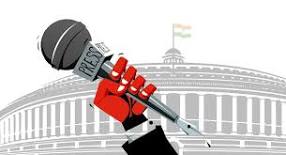
Press Self-Restraint in Constitutional Culture refers to the voluntary ethical limitation exercised by the media in a constitutional democracy to ensure that:
- Freedom of speech and press freedom are exercised responsibly
- Reporting does not undermine fair trial, privacy, institutional integrity, or constitutional order
- The media acts as a democratic watchdog without becoming a “parallel adjudicatory authority”
In ultra-doctoral constitutional theory, it examines:
How constitutional democracies depend not only on legal restrictions on the press, but on the press’s own internal ethical restraint to preserve constitutional balance.
2. Core Thesis
Constitutional freedom of the press survives not merely through legal protection, but through self-imposed ethical restraint that prevents constitutional conflicts between free speech, justice, privacy, and institutional legitimacy.
3. Philosophical Foundations
(1) Liberty with Responsibility Model
Freedom is not absolute; it is balanced with:
- Dignity
- Public order
- Fair trial
- Institutional integrity
(2) Constitutional Morality of the Press
Press is expected to uphold:
- Truthfulness
- Fairness
- Non-prejudicial reporting
- Public interest journalism
(3) Doctrine of Institutional Harmony
Constitutional institutions must not be weakened by:
- Media trial
- Sensationalism
- Prejudicial narratives
(4) Information Ethics Theory
Media acts as:
- A public information provider
- Not a judicial or investigative substitute authority
(5) Responsible Liberty Principle
Freedom exists within constitutional boundaries shaped by:
- Rights of others
- Rule of law
- Institutional fairness
4. Dimensions of Press Self-Restraint
A. Sub Judice Restraint
Avoid publishing content that may influence ongoing trials.
B. Privacy Restraint
Protection of individual dignity, especially in sensitive cases.
C. National Security Restraint
Limiting disclosure of sensitive operational information.
D. Defamation Avoidance
Preventing reputational harm without due verification.
E. Institutional Respect
Avoiding destabilization of courts, legislature, and executive through sensational narratives.
F. Ethical Verification
Ensuring accuracy before publication.
5. Why Press Self-Restraint is Constitutionally Important
1. Protects Fair Trial Rights
Prevents media-induced bias in judicial proceedings.
2. Preserves Institutional Legitimacy
Courts and agencies are not subjected to parallel trials.
3. Strengthens Democracy
Responsible journalism improves informed citizenship.
4. Prevents Mob Justice
Avoids public opinion overriding legal process.
5. Maintains Constitutional Balance
Balances Article 19(1)(a) with Article 21 rights.
6. Six Landmark Case Laws on Press Freedom and Self-Restraint
1. Sakal Papers Ltd. v. Union of India
Issue
Government attempted to regulate newspaper pricing and page limits.
Judgment
Struck down restrictions on press freedom.
Constitutional Insight
- Press freedom is part of Article 19(1)(a)
- Government cannot indirectly control media expression
Relevance to Self-Restraint
While press freedom is protected, the judgment implies:
Freedom is constitutional, but responsibility is internal, not state-imposed
2. Bennett Coleman & Co. v. Union of India
Issue
Newsprint control order limiting newspaper expansion.
Judgment
Held unconstitutional as it restricted press freedom.
Constitutional Insight
- Freedom of press includes operational autonomy
Relevance to Self-Restraint
Court emphasized:
External control is impermissible, but ethical restraint must come from press professionalism
3. R. Rajagopal v. State of Tamil Nadu
Issue
Publication of autobiography of a convicted criminal and privacy concerns.
Judgment
Recognized right to privacy and limits on publication.
Constitutional Insight
- Press cannot publish private life details without consent
- Exception only for public records
Relevance to Self-Restraint
Strong foundation of:
Privacy-based journalistic restraint
4. Sahara India Real Estate Corp. Ltd. v. SEBI
Issue
Media reporting potentially prejudicing ongoing corporate trial.
Judgment
Introduced concept of postponement orders.
Constitutional Insight
- Courts can temporarily restrict publication to protect fair trial
Relevance to Self-Restraint
Explicit recognition that:
Media must sometimes restrain itself to protect justice system integrity
5. A.K. Gopalan v. State of Madras
Issue
Preventive detention and fundamental rights.
Judgment
Upheld detention laws (later evolved jurisprudence).
Constitutional Insight
- Early restrictive approach to rights
- Later evolved toward balancing liberty and procedure
Relevance to Press Ethics
Shows evolution toward:
Greater sensitivity to procedural fairness, influencing media restraint norms indirectly
6. Maneka Gandhi v. Union of India
Issue
Passport impoundment and due process.
Judgment
Expanded Article 21 to include fairness and reasonableness.
Constitutional Insight
- Due process is integral to liberty
Relevance to Press Self-Restraint
Establishes foundation that:
Media must not violate fairness, dignity, and procedural justice in reporting
7. Doctrinal Synthesis
“Three Pillars of Press Self-Restraint”
1. Fair Trial Protection
Media must not prejudice judicial outcomes.
2. Dignity Protection
Individuals retain privacy and reputation rights.
3. Institutional Harmony
Media must not destabilize constitutional institutions.
8. Constitutional Balance Framework
Article 19 vs Article 21 Tension
| Article 19(1)(a) | Article 21 |
|---|---|
| Freedom of speech | Right to life & dignity |
| Press freedom | Privacy & fair trial |
Press self-restraint acts as:
A constitutional bridge between expression and dignity.
9. Advanced Theoretical Model
“Internalization of Constitutional Limits Theory”
Instead of external censorship:
- Courts set constitutional boundaries
- Press internalizes them as ethics
- Self-regulation replaces state control
10. Institutional Mechanisms Supporting Self-Restraint
1. Editorial Guidelines
Internal newsroom ethics codes
2. Press Councils
Quasi-regulatory ethical bodies
3. Contempt Jurisprudence
Limits on prejudicial reporting
4. Sub Judice Doctrine
Restraint during ongoing trials
5. Journalistic Standards
Fact-checking and verification norms
11. Critical Challenges
1. Sensationalism vs Ethics
Commercial pressure undermines restraint.
2. Social Media Acceleration
Instant reporting reduces verification time.
3. Trial by Media
Public opinion influences judicial perception.
4. Declining Institutional Authority
Courts and agencies face reputational pressure.
12. Conclusion
Press Self-Restraint in Constitutional Culture is not a legal imposition but a constitutional necessity rooted in democratic ethics.
It ensures that:
- Freedom of expression does not collapse into informational anarchy
- Journalism does not replace judicial process
- Democracy remains both free and fair
Ultimately, constitutional democracy depends not only on what the press is allowed to do, but on:
What the press chooses not to do in the interest of constitutional balance
RELATED Blog









comments